

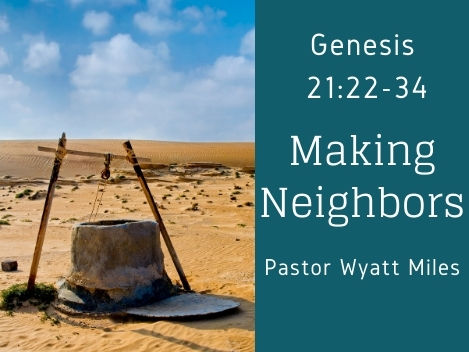
Making Neighbors - Genesis 21:22-34
- Pastor Wyatt Miles

- Nov 4, 2020
- 4 min read
Bible Study Lesson for November 4
One topic I think a lot about it reconciliation. Ever since I was in elementary school, forgiveness and restoration of relationships has been something that I’ve been interested in. In fourth grade, I was selected to be a peer mediator, and I was trained to help my classmates settle their disputes for themselves. The idea was that if we worked together, we children could resolve our problems without the teachers having to resort to disciplinary measures. I learned a lot about confidentiality and conflict resolution, but I also learned a lot about conflict itself, as well as the power of listening and empathy. Today’s passage is a brief and sparse passage, but it is a passage about conflict and the people of God. I think it has some things to teach us about how we should approach conflict in life.
One of the things that we have to learn if we are going to resolve interpersonal conflict is that we need to try to become impartial and let go of our assumptions about who is right and who is wrong. We should start with remembering that no one is in the right one hundred percent of the time. While the character of individuals is certainly important, the goal of mediation is conflict resolution rather than rewarding or punishing behavior. It is in give-and-take, dialog, and listening to each other’s stories and perspectives about what happened that we can begin to find common ground. On the whole, we seek justice in our public lives, but privately and relationally we seek reconciliation where it is possible. Abraham and Abimelech in this story present a model of what that might look like.
21:22-24 Establishing Relationship
Abimelech’s re-entry into the story is somewhat jarring, as we left him behind in Genesis 20 in order to hear about the birth of Isaac and deal with Abraham’s family concerns. Here Abimelech comes to Abraham with an affirmation and a request. Abimelech, the outsider, recognizes that Abraham is special to God. However, Abimelech does not seem to trust Abraham. It is important to remember Genesis 20, because Abraham has given Abimelech reason to doubt. In that story, Abraham passed off Sarah as his sister because he was afraid if people knew she was his wife they would kill him in order to marry her. This almost resulted in a disaster for Abimelech which he avoided when he found out God was about to punish him for stealing Abraham’s wife.
So we see, Abimelech has reason to distrust Abraham. In the story in Genesis, Abraham has almost cost Abimelech everything through his attempts to protect himself. Abimelech comes to him with the expressed desire of establishing a relationship of mutual trust. In the ancient world, a covenant was a serious bond that two parties entered into in order to assure that they would seek each other’s welfare. Swearing to one another was a way to ensure that both participants would keep to their obligations.
It is worth noting that Abraham does not protest his trustworthiness. He merely commits to deal loyally with Abimelech from this day forward. Abraham is not blessed because he is good or trustworthy. He is blessed because God has chosen him to have an important place in the world. Abimelech is asking Abraham to live responsibly in light of his blessing, not to repeat the mistakes that led to the mistrust between them before. The covenant that they swear is the beginning of a new relationship between them.
21:25-34 Conflict and Mediation
The main point commentators make about this story is that the conflict and its resolution serve to give an explanation for the name of a place. Beer-sheba in Hebrew means “The Well of the Seven” or “The Well of the Oath.” There is another story about Beer-sheba getting its name in Genesis 26:33. In that story, the conflict is between Isaac and Abimelech. But this short story we have in Genesis 21 provides us with an insight into what “loyal dealing” between Abraham and Abimelech looks like.
Abraham goes to Abimelech with a complaint. Abimelech’s servants have taken a well from Abraham. Abraham gives Abimelech some livestock, especially seven ewe lambs, as a token that Abimelech will be obligated to witness that the well belongs to Abraham as the one who dug it. On one level this looks like Abraham buying the well, but since Abimelech is the king of the region, we could view it more as a fee. The main thing, though, is that Abraham gives to Abimelech as a sign of good faith. Abraham is not in a position to insist on justice. Not too long ago he put Abimelech in danger with his dishonesty. But because they now have a covenant relationship, Abraham can ask Abimelech to recognize his rights to the well at Beer-sheba. It is a small thing, but it will move the two toward establishing trust with each other.
In this story of Abimelech and Abraham, we see a model for moving past grievances. Generosity and communication are tremendously important.
For Abraham to live as a visitor in Abimelech’s country, he must be willing to make assurances and also be able to express his concern when his rights and property are not protected. I think we see in this story the beginnings of neighborliness between the two men. To live in a place together is to make a commitment to each other’s care. How can we manage our conflicts and make peace with our neighbors today? It takes communication and generosity.


Comments